-
Type
-
Marine Fish
-
Title
-
Dorab wolf-herring
-
Local Name
-
മുള്ളുവാള
-
Common Name
-
Dorab wolf-herring
-
Scientific Name
-
Chirocentrus dorab
Taxonomy
-
Kingdom
-
Animalia
-
Phylum
-
Chordata
-
Class
-
Teleostei
-
Order
-
Clupeiformes
-
Family
-
Chirocentridae
-
Genus
-
Chirocentrus
-
Species
-
Chirocentrus dorab
-
Short Description
-
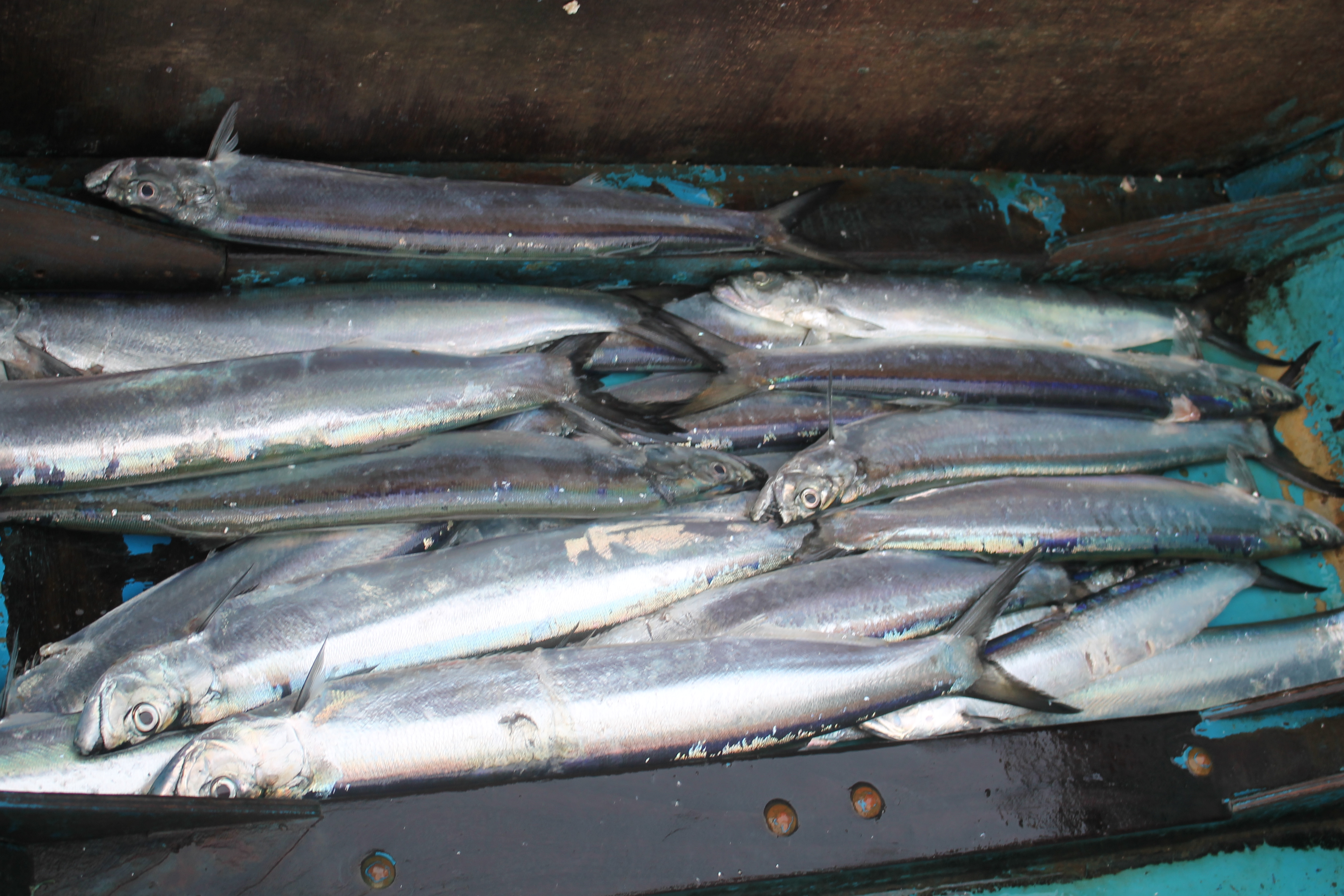
Silver Bar Fish, a type of fish with bones that is commonly known as Karli in Kerala is an important commercial fish in Kerala, and is used in dishes like fish fry.
-
Habitat
-
Marine; brackish; reef-associated; amphidromous
-
Morphology Details
-
The upper body is blue-green, sometimes tinged with violet, while the sides and belly are brightly silvery
Slender, elongate, and highly compressed body with a sharp belly and silvery, bright blue coloration that fades to grey, complemented by bright silver flanks and a characteristic black marking on the upper part of the dorsal fin.
-
Distinctive Features
-
Body coloration offers efficient camouflage in the coastal and estuarine habitats where it is found.
-
Feeds Upon
-
It feeds mainly on small fish and crustaceans (Ref. 188, 30573). Voracious predators of small schooling fishes, e.g. herrings and anchovies (Ref. 37816). Marketed fresh, frozen or dried and salted.
-
Interesting Facts
-
Voracious carnivorous predator of smaller fish and crustaceans.It is commercially valued and can be found fresh, dried, salted, or frozen, ranging in length from 3–120 cm and weighing up to 1.2 kg
-
Threats and Impacts
-
Its impact includes its role as a significant predator in the marine food web, which can influence the population dynamics of smaller fish species, but it is not currently considered at risk or to cause drastic population declines due to fishing pressure.
-
Conservation Status
-
Listed as Least Concern according to the IUCN Red List. This indicates that it is not currently at significant risk of extinction in the wild.
-
Reproduction Details
-
It is a protandrous hermaphrodite, where individuals start life as males and later change to females as they grow larger. They spawn round the year with peak spawning periods generally in September-October, producing large numbers of eggs, with fecundity increasing linearly with body size.
Comments & Suggestions
No comment yet! Be the first to add one!