-
Type
-
Marine Bird
-
Title
-
Lesser Crested Tern
-
Local Name
-
ചെറിയ കടലാള
-
Common Name
-
Lesser Crested Tern
-
Scientific Name
-
Thalasseus bengalensis
Taxonomy
-
Kingdom
-
Animalia
-
Phylum
-
Chordata
-
Class
-
Aves
-
Order
-
Charadriiformes
-
Family
-
Laridae
-
Genus
-
Thalasseus
-
Species
-
T. bengalensis
-
Short Description
-
A sleek, medium-sized seabird known for its sharp orange bill, grey-and-white plumage, and highly agile plunge-diving feeding style.
-
Habitat
-
Coastal waters, estuaries, mudflats, coral reefs, and sandy shorelines.
-
Habitat Preference
-
Strongly favors warm marine and coastal environments; it rarely ventures inland. It prefers sheltered estuaries, sandbanks, and mudflats for roosting.
-
Location Name
-
Kadalundi Bird Sanctuary, Kerala, India
-
Location Description
-
A prominent estuarine ecosystem situated where the Kadalundi River flows into the Arabian Sea. It features expansive mudflats, sandbanks, and mangrove patches that serve as a crucial wintering and roosting ground for migratory seabirds and shorebirds.
-
Decimal Latitude
-
11.1306
-
Decimal Longitude
-
75.8282
-
Morphology Details
-
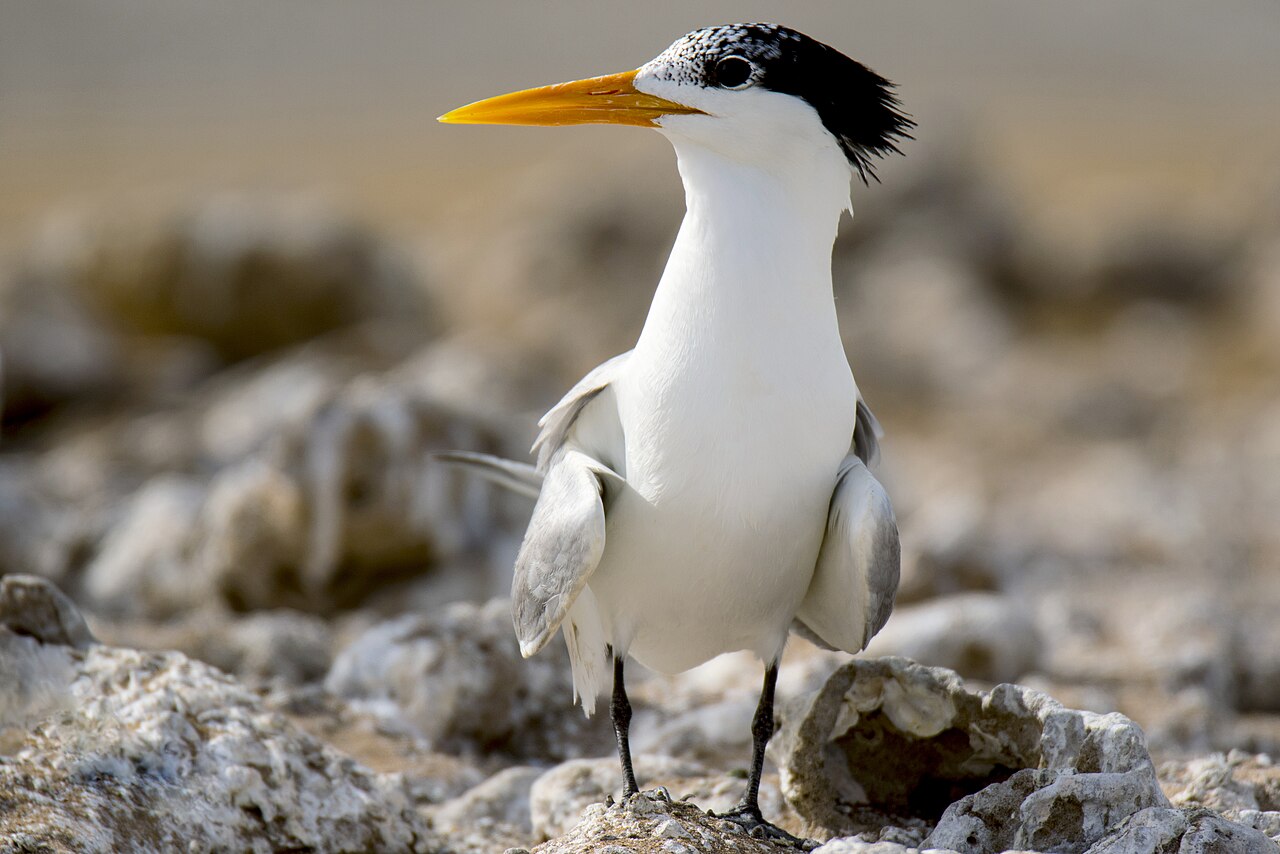
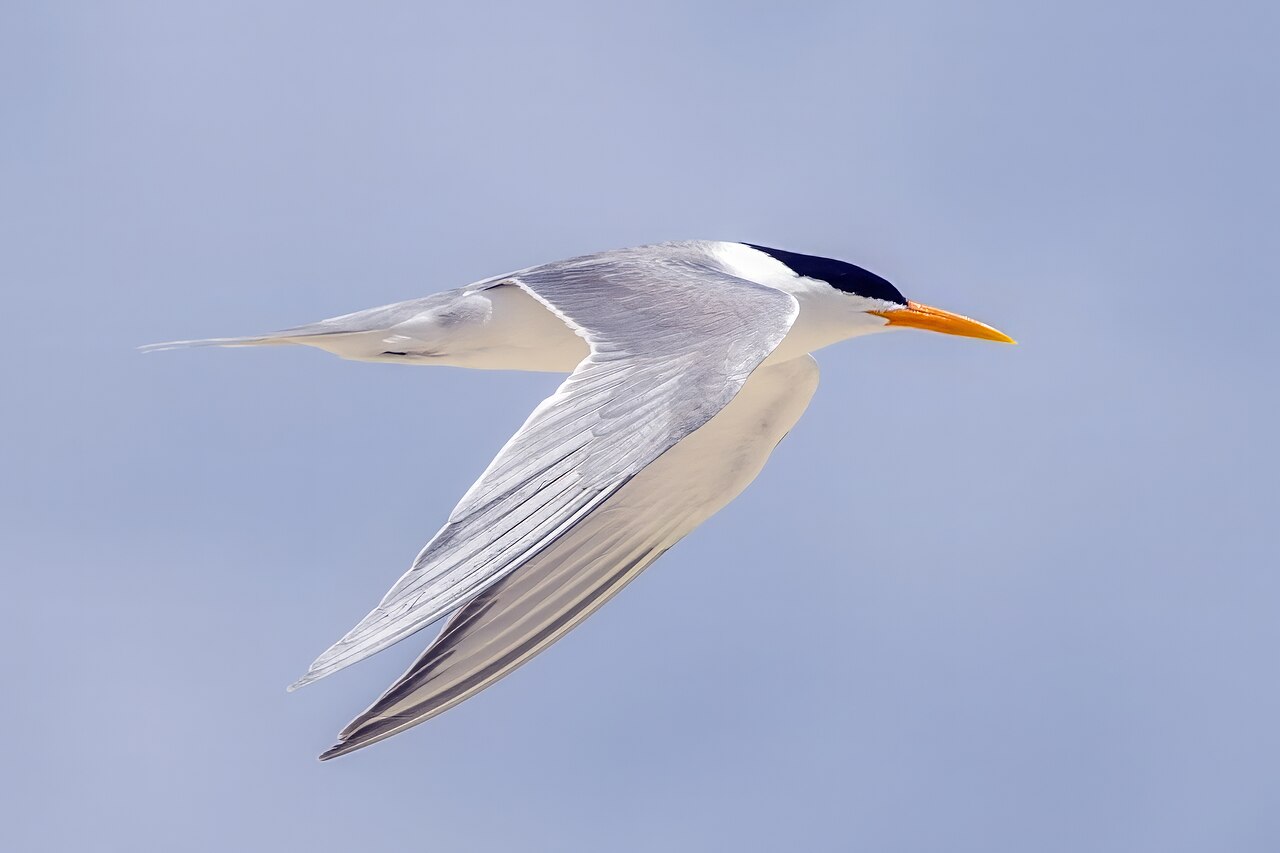
Features long, pointed wings and a deeply forked tail for maximum aerodynamic efficiency. In non-breeding plumage (how it is most commonly seen in Kerala), adults have a white forehead with a shaggy black crest at the back of the head.
-
Distinctive Features
-
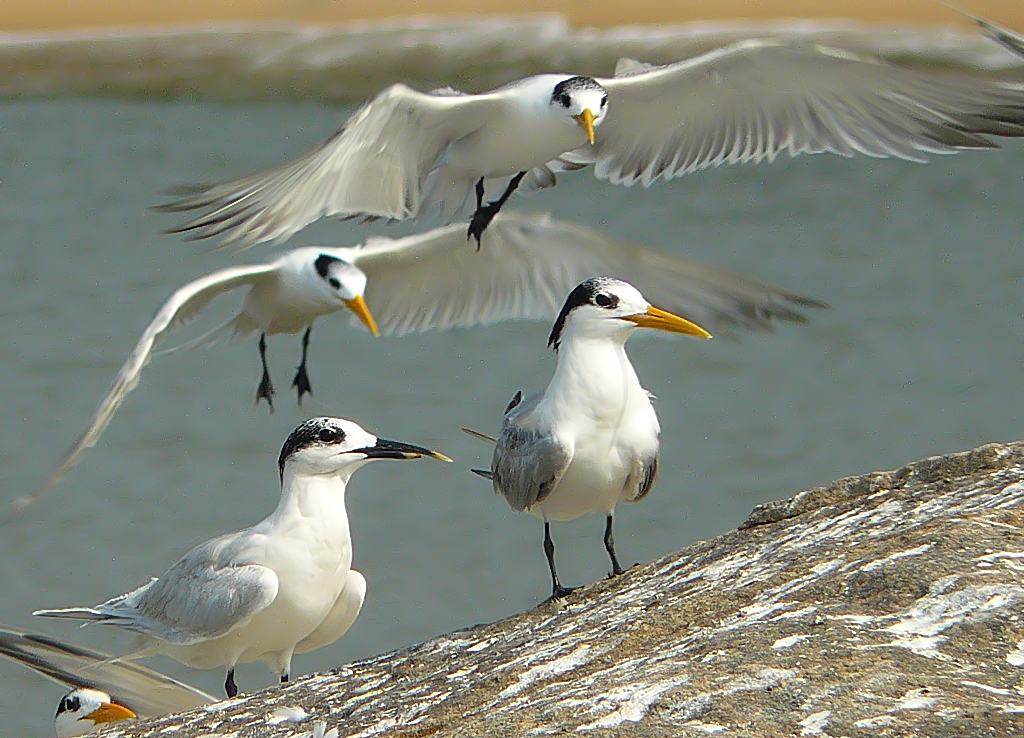
The most distinguishing mark is its bright, slender orange bill, which sets it apart from the larger, yellow-billed Greater Crested Tern. It has black legs, and in flight, its pale grey upperparts contrast cleanly with its crisp white underparts.
-
Feeds Upon
-
Small pelagic fish (such as sardines and anchovies), small crustaceans, and occasionally squid.
-
Nursery/Breeding site
-
They do not typically breed in Kerala, visiting primarily as winter foragers. They breed on low-lying sandy, rocky, or coral islands (such as those in the Gulf of Mannar, the Lakshadweep archipelago, and the Red Sea).
-
Total Length (cm)
-
35–43
-
Weight (grams)
-
185–250
-
Reproduction Details
-
The female lays 1 to 2 eggs in a simple, unlined shallow scrape in the bare sand. Incubation is shared by both parents and takes approximately 21–26 days.
-
Reproductive Behaviour
-
They are highly colonial nesters, breeding in densely packed, noisy groups. Courtship involves dramatic aerial displays, "high flights," and the male bringing small fish to offer to the female on the ground.
-
Description
-
The Lesser Crested Tern is a highly social and graceful seabird frequently observed patrolling the Arabian Sea coastline of Kerala during the winter months. Built for aerial agility, it possesses a streamlined body, sharply pointed wings, and a deeply forked tail. Its bright orange bill and sharply contrasting grey back and white underparts make it a striking sight. While it breeds on remote oceanic islands in dense colonies, it utilizes the estuarine mudflats and coastal sandbars of Kerala as vital resting and feeding sites. Its energetic, high-speed plunge-diving technique is a spectacular display of precision hunting.
Comments & Suggestions
No comment yet! Be the first to add one!