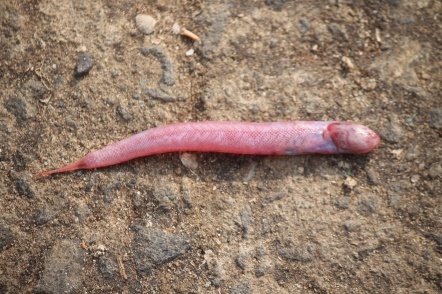
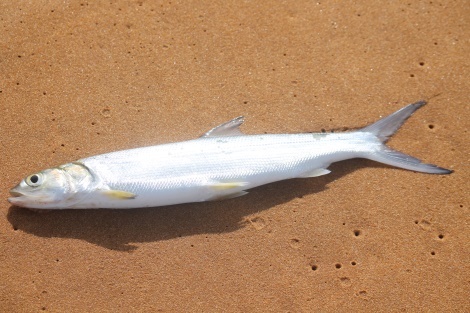
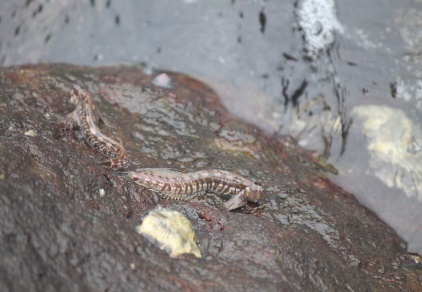
Amphibious fish found along the tropical Atlantic coasts of Africa, and extending into the Indian and Western Pacific Oceans. Unlike most fish, these unique creatures are well-adapted for life both in and out of the water.
Fisheries: commercial; gamefish. Predator of small fish and crustaceans,plays a role in coastal food webs. Changes in estuarine and lagoon habitats may affect its population dynamics, potentially influencing local ecological balance.
As a predator of crabs and other invertebrates, Echidna catenata contributes to maintaining balanced ecosystem dynamics in reef environments. By controlling crustacean populations, it indirectly supports coral health and reef biodiversity. Occasionally captured for the aquarium trade, highlighting the species' economic and ecological relevance.
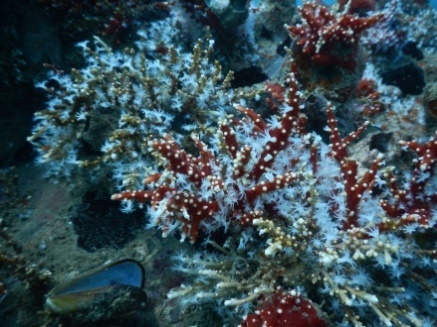
Marine; depth range 10 m. Prefers shade and grows on hard surfaces away from direct sunlight such as caves, under piers, ledges, overhangs, docks, piers, offshore oil platforms, and ship hulls. Also found in a range of marine habitats, including reefs, mangroves, and man-made structures.
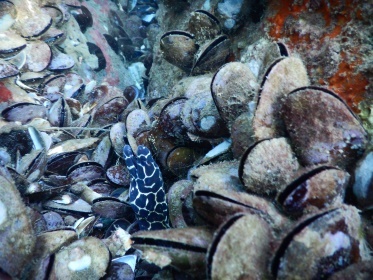
Adults are found over hard bottoms. Mainly nocturnal, they mainly feeds on invertebrates, often feeds on algae present on the promontories (Rock projecting into the sea beyond the line of coast). Eggs are demersal and adhesive and are attached to the substrate via a filamentous, adhesive pad or pedestal. Bottom spawners. Eggs are laid under mussel-shells or stones and guarded by the male. Larvae are planktonic, often found in shallow, coastal waters.
• Most blenny species are not a common food source /commercially fished for human consumption due to their small size and presence of venom in some species.
• Butterfly blennies are preyed upon by larger fish like moray eels, snappers, groupers, striped bass, bluefish and weak fish. These predators often hunt them in areas with crevices and vegetation where butterfly blennies seek refuge.